Background
This patient was 35-year-old male who works as an engineer and is an active guy who enjoys lifting weights, but recently injured his low back while barbell squatting. He tried to shake it off, but the discomfort lingered despite trying some stretches he found on social media and took more days off from lifting. Despite rest he still was having some pain issues while working around the house when he has to bend or stoop or carry anything heavy. He went to the doctor who gave him some pain meds and over time started feeling better. After about six weeks of minimal discomfort he returned to lifting weights and experienced another episode of back pain. He described the sensation as if his back might “give out” under the bar or a feeling of weakness with occasional sharp pains when bends, stoops or turns in bed.
Why Back Pain Happens During Squats
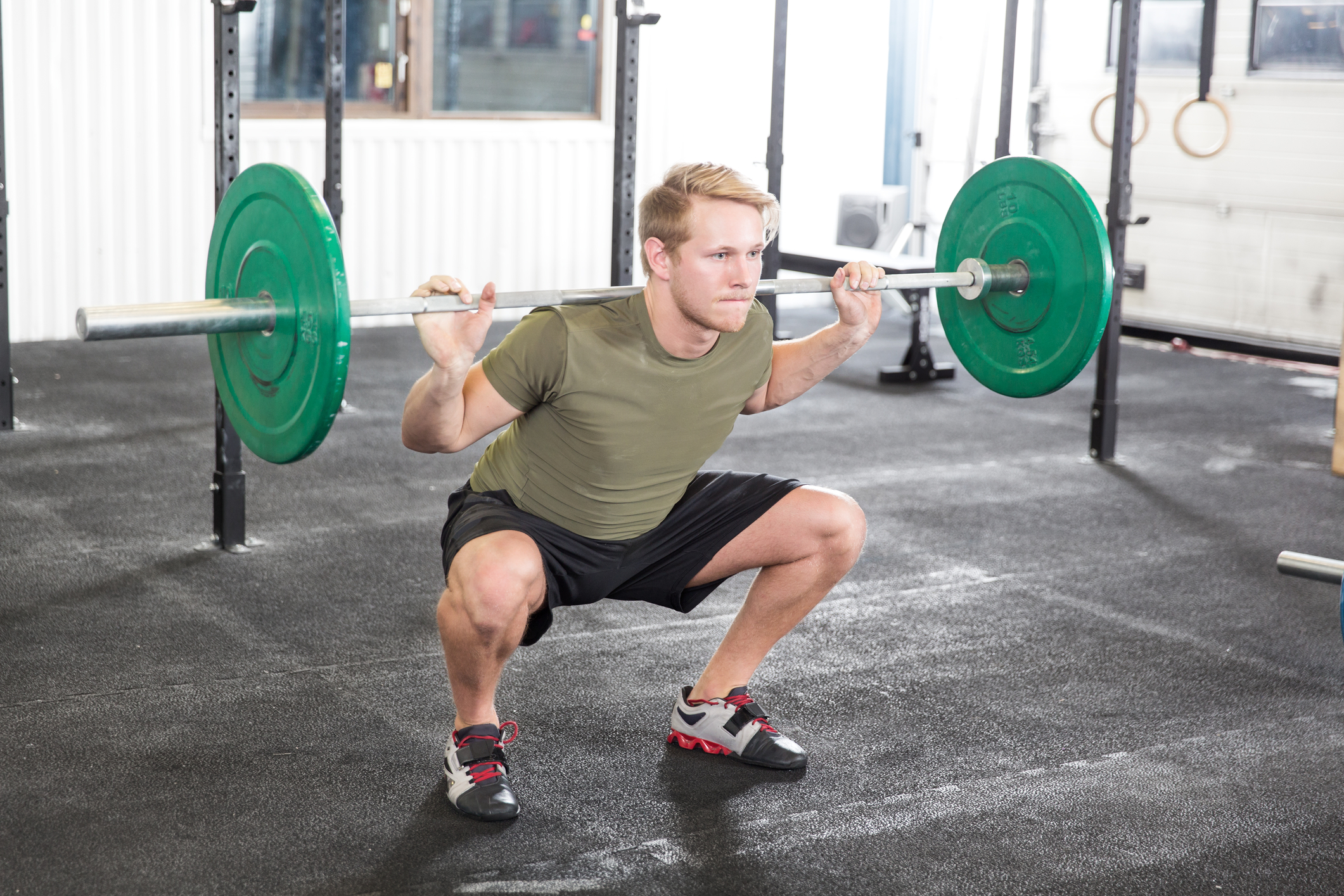
Back pain during squats is a common issue, although squats themselves aren’t harmful. However when technique, load, or mobility isn’t optimal, the spine can take on more stress than it’s ready for. Poor load management such as increasing weight, frequency, or training volume increases injury risk. Studies have shown training load that is progressed too fast has been strongly linked to musculoskeletal injury risk [2]. Technique breakdown can also predispose someone to a back injury. Excessive forward lean, collapsing knees, or the notorious “butt wink” which is posterior pelvic tilt at the bottom of the squat, can stress the spine [3]. Mobility restrictions of the hip, ankle, or thoracic spine mobility can force compensations and create uneven load distribution. For instance, lack of ankle dorsiflexion often leads to rounding in the lower back [4]. Insufficient core or trunk stability such proper bracing and intra-abdominal pressure the lumbar spine bears more load than it can handle [5]. Postural Influences such as occupational postures or positions overt time can predispose a back to injury when put under load such as a squat. An already sensitive disc, facet joint and spinal ligaments due to prolonged exposures to poor postures becomes more sensitive when load is applied [6].
Examination Findings
We ran audit of his daily Motions, Activities and Loads tolerance including spine specific exam and several contributing factors were identified:
- Movement Pain Pattern: Pain was reproduced with flexed, loaded positions but eased in a neutral spine or extended spine
- Squat Movement assessment – His squat revealed increased lumbar flexion when he forced himself to depth. Less pain with half-depth.
- Joint Mobility – Mobility testing showed broad hip joint tightness especially in flexion and thoracic mobility limitations.
- Training habits – He lacked structured recovery and sometimes pushed through the pain.
- Daily Habits – Working as an engineer required long hours of unsupported sitting. Working around the house revealed repeated bending and stooping from the back.
The Treatment Approach
We created a targeted program that addressed his specific issues. He began with extension-based movements such as McKenzie exercises, which helped centralize his pain, core specific exercises that worked on deep stabilizers, manual therapy & soft tissue work to reduce tension in the lumbar paraspinals and improving hip and thoracic mobility, corrective exercises, laser therapy to reduce inflammation and promote recovery of irritated tissues, technique coaching and spine hygiene education on how to protect his spine while recovering.
Outcome
Within two weeks, he reported significant pain reduction. He was able to perform light barbell squats with better form and no pain. Over the next few weeks, we gradually reloaded his squat, increased the depth and increasing weight only as tolerated. By focusing on technique, recovery, and mobility, he returned to his regular training routine without setbacks.
Key Lessons for Lifters
Back pain with squats is many times about how you’re squatting and progressing with loads. Besides technique, Common deficits identified during the back squat that can impair performance can be broken down to be either neuromuscular coordination, core and muscle weakness, strength asymmetry, joint immobility or muscle tightness. A thorough exam can uncover the hidden reasons for pain that generic rehab often misses. Most people with squat-related back pain can return to lifting safely and confidently.
Ready to Get Back Under the Bar?
If you’ve been struggling with back pain during squats—or any other lifts—don’t let frustration keep you from training. With the right approach, recovery is possible, and you can return to the activities you love.
Call our clinic today to schedule your personalized spine assessment and get a clear plan for safe, confident lifting.
References
1. McGill, S. (2010). Core training: Evidence translating to better performance and injury prevention. Strength & Conditioning Journal, 32(3), 33-46.
2. Soligard, T. et al. (2016). How much is too much? (Part 1) International Olympic Committee consensus statement on load in sport and risk of injury. British Journal of Sports Medicine, 50(17), 1030–1041.
3. Schoenfeld, B. J. (2010). Squatting kinematics and kinetics and their application to exercise performance. Journal of Strength and Conditioning Research, 24(12), 3497–3506.
4. Macrum, E., Bell, D., Boling, M., Lewek, M., & Padua, D. (2012). Effect of limiting ankle-dorsiflexion range of motion on lower extremity kinematics and muscle-activation patterns during a squat. Journal of Sport Rehabilitation, 21(2), 144–150.
5. Willardson, J. M. (2007). Core stability training: Applications to sports conditioning programs. Journal of Strength and Conditioning Research, 21(3), 979–985.Alexander, 6. Lyndsay A., et al. “The response of the nucleus pulposus of the lumbar intervertebral discs to functionally loaded positions.” Spine 32.14 (2007): 1508-1512.